Imagine walking into a library where the books have literally read themselves. They’ve absorbed every word, every comma, and every rhythmic cadence of human thought.
But there’s a catch: the library doesn’t have a librarian. It just has a very, very talented parrot.

Welcome to the world of Large Language Models (LLMs). To master them, we have to understand the difference between mimicry and meaning.
1. The Talented Parrot (Statistical Mimicry)
Richard Feynman once said, "Knowing the name of something isn't the same as knowing the thing."
LLMs are the ultimate "name-knowers." At their heart, they are statistical engines. When you ask an LLM a question, it isn't "thinking" in the biological sense. It is calculating a probability distribution over the next possible token (a word or piece of a word).
Using a mathematical function called Softmax, the model looks at the context you've provided and predicts which word is most likely to follow. If I say, "The cat sat on the...", the model doesn't "see" a mat. It sees that in billions of lines of text, the token "mat" follows that sequence with 98% probability.
Key Takeaway: LLMs are "Stochastic Parrots." they are incredibly good at mimicking the structure of human knowledge without necessarily possessing a model of the world.
2. The Common Sense Gap
As Gary Marcus argues in Rebooting AI, statistical models have a "Common Sense Gap." They can write a beautiful poem about a glass of water, but they might not realize that if you flip the glass, the water will fall.
Because they learn from text, not from physical interaction, they lack a World Model. They understand symbols, but not the grounded reality behind them. This is why an LLM can provide a perfect medical diagnosis in one breath and hallucinate a non-existent law in the next. They are playing a game of "infinite word-association."
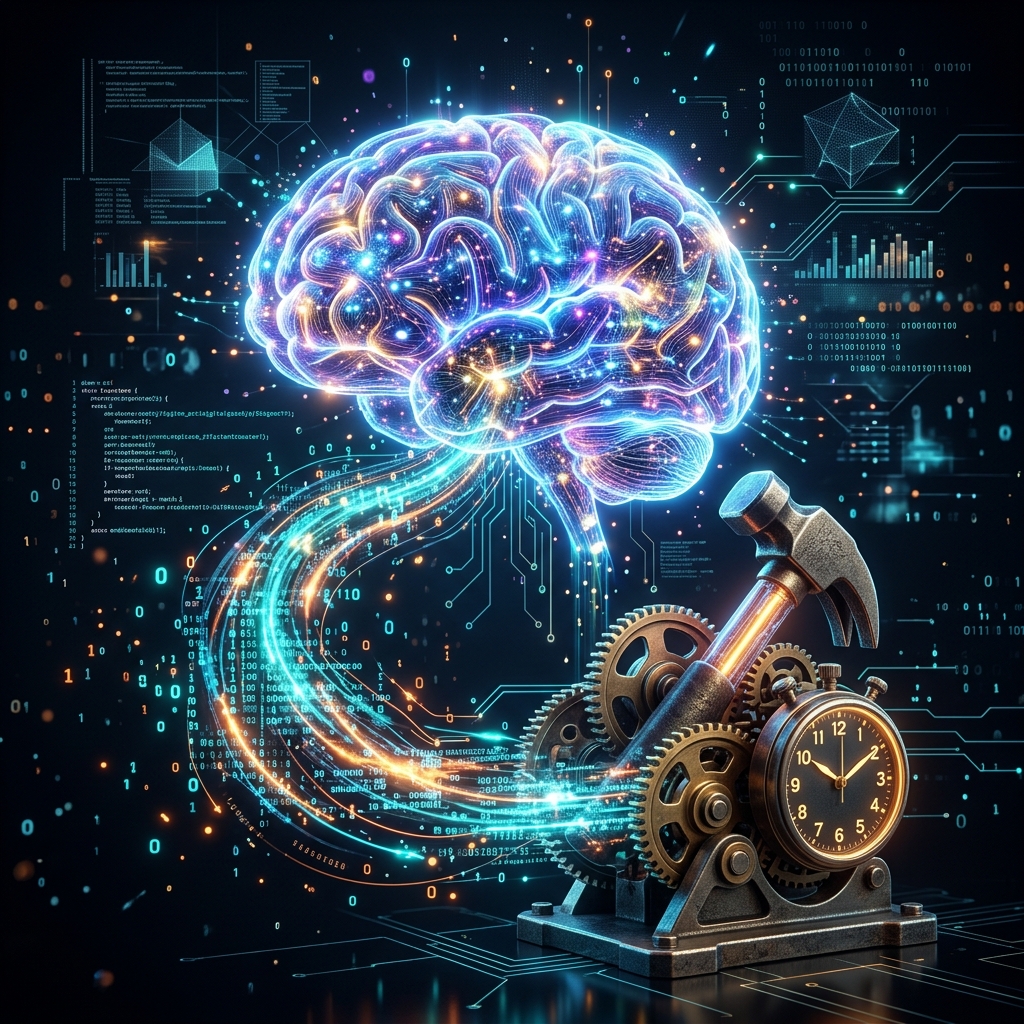
3. The Digital Butler (Autonomous Agents)
How do we fix a parrot that doesn't understand the world? We give it a Librarian.
In modern engineering, we call these AI Agents. An Agent is an LLM wrapped in a "reasoning loop" (like ReAct: Reason + Act). Instead of just answering you, the Agent can:
- Search for real-time data (RAG - Retrieval Augmented Generation).
- Use Tools (Calculators, APIs, Python interpreters).
- Reflect on its own errors and try again.
By connecting the "brain" (the LLM) to "hands" (APIs), we bridge the gap between theory and action. The Agent doesn't just talk about the library; it goes to the shelf, grabs the right book, and checks the facts.
4. Co-Intelligence: The Partnership Era
The final shift isn't technical—it's psychological. Ethan Mollick, in Co-Intelligence, suggests we are moving past the era of "AI as a tool" and into the era of "AI as a partner."
Think of it like a Handshake. You bring the human intent, the moral compass, and the common sense. The AI brings the vast, statistical scale, the tireless processing, and the creative spark.
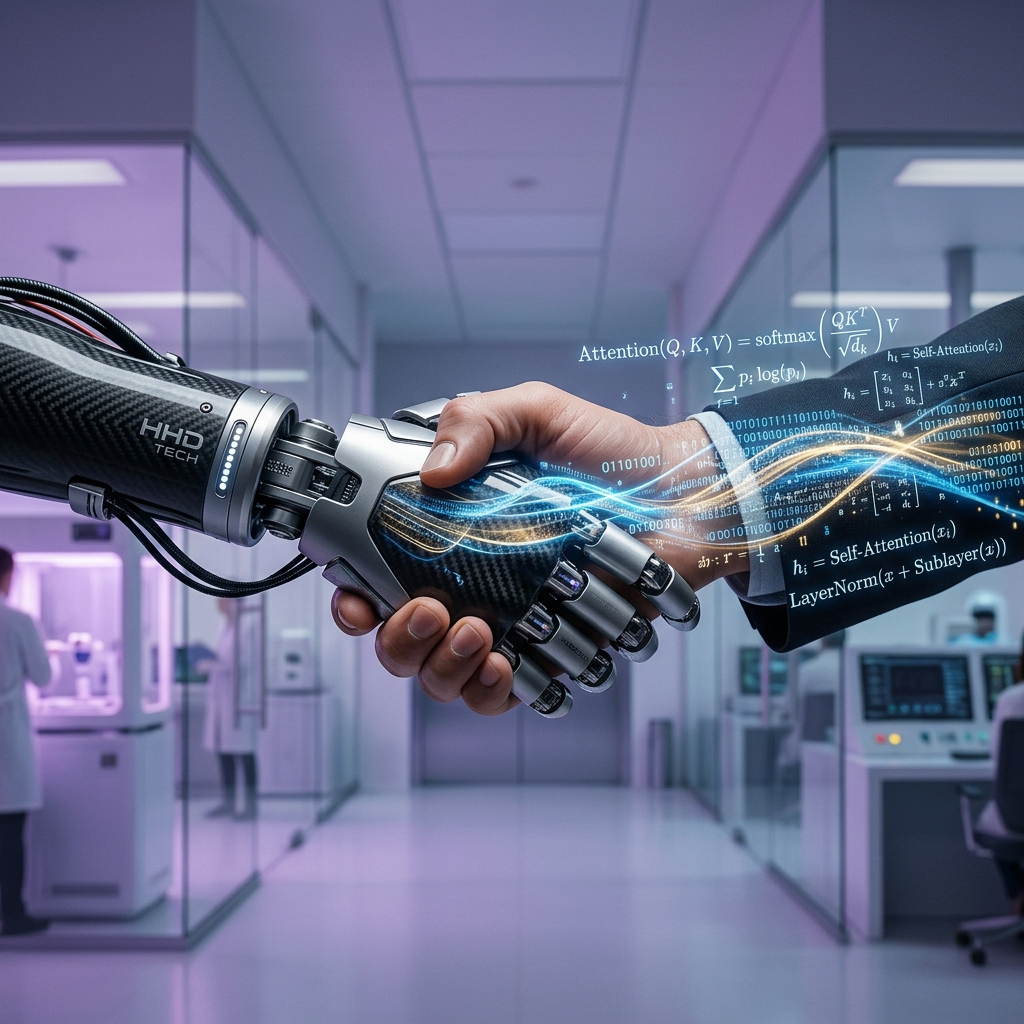
When these two meet, you don't just get a better search engine. You get Co-Intelligence—a collaborative intelligence that is greater than the sum of its parts.
📚 References & Further Reading
This post was synthesized from the foundational concepts found in:
- Raschka, Sebastian. Build a Large Language Model (From Scratch). Manning Publications. (Structural mechanics of transformers).
- Marcus, Gary & Davis, Ernest. Rebooting AI: Building Artificial Intelligence We Can Trust. Pantheon. (The Common Sense Gap).
- Mollick, Ethan. Co-Intelligence: Living and Working with AI. Portfolio. (The partnership framework).
- Lanham, Michael. AI Agents in Action. Manning Publications. (Agentic design patterns).
- Alammar, Jay. Hands-On Large Language Models. O'Reilly Media. (Visualizing the attention mechanism).
Master the deepest functional layers of modern AI—from the foundational next-token prediction to the high-level orchestration of agentic systems.